I stepped off the plane in Zürich 19 years ago with just one word of German – “nein”. And apart from dabbling in some French in high school, and attempting Japenese at university, I had never stepped out of my English speaking safety net. But here I was, a nineteen years young Australian Au-Pair thinking that my motivation will see me add German-speaker to my resume. Naively, I thought that by the time I stepped back on that plane 12 months down the track, I could impress my friends with my fluency.
But there was a little problem with my plan. Firstly, I never did go back to Australia, that’s a story for another day, but 12 months on, I was anything but fluent. Learning german was a lot harder than I expected, especially as the German I learnt in my bi-weekly classes was found only in the newspapers and the 7.30 pm news.
And then I met a Swiss guy.
All of a sudden, I found the motivation that had been lacking. I saw a future with him, and if I wanted to have any chance of integrating into his life here in Switzerland, I had to learn not only German but Swiss-German too.
So I did. And now I can proudly watch tv, sing along with Swiss songs and confidently get through a parent-teacher interview entirely in dialect.
So how did I do it? Here are six tips that helped me learn to roll my r’s and add -li to the end of every noun. There are tips in there that helped me learn my “high german” too:
1. Get a decent grasp of “High German”.
Swiss German is of course based on high German, so having a decent grasp is essential. I started my German learning off at the standard twice a week Migros Klubschule but found I made significant progress once I committed to daily classes. Committing to half-day classes for six months in Luzern was intense, but a worthy investment in my new Swiss life,
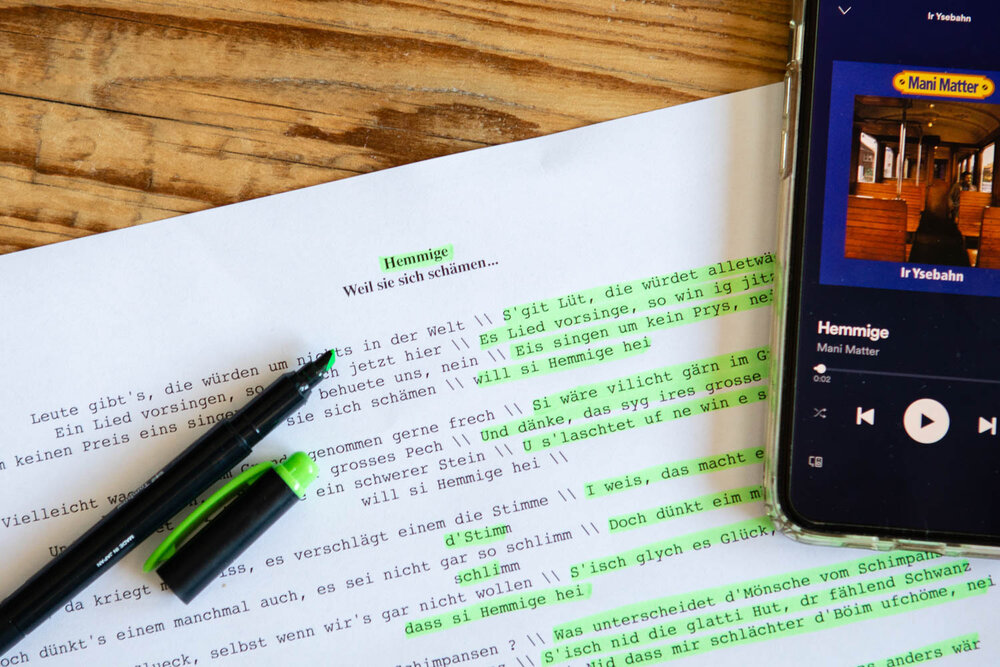
2. Listen to Swiss-German Music
Swiss-German clicked the moment my German teacher in Luzern brought in the music of swiss Folk singer Mani Matter. With the song “Hemmige”, he tasked us to translate the Swiss-german song text into High German. It was this task that helped me see the patterns in Swiss-german and opened my ears to learning it. I listened to Mani Matter on repeat for many weeks after that, adding in other artists along the way. I found this tip useful too when beginning to learn German in the first place. Somehow music helped me solidify the different sounds.
3. Watch Swiss TV
Once things began to click, I felt a little more confident to watch Swiss TV shows and movies. I started with classic films such as Ueli der Knecht and Hinter den Sieben Gleisen which had conveniently taught me a bit of swiss cultural history along the way. I progressed to watching the local current affairs show Schweiz Aktuell (7 pm SRF1) and now thoroughly enjoy shows like Auf und Davon, SRF bi de Lüt and Landfrauenküche.

4. Put yourself out there and practice
I promise you, I am no foreign-language talent, and I too had to get over my terrible pronunciation and fear of being corrected and practise. I started out practising with my five young (at the time) nephews, but then soon braved adding a word in here and then when adults were around too. I made the most improvements when I joined a local Verein (club) where after choir practice drinks are a crucial part of the group’s culture. I quickly found that the Swiss were very appreciative in any attempt I made to learn.
5. Take a Swiss-german class.
This was not on offer when I was first learning Swiss-German, but today there are offerings from many language schools. You do though need a decent grasp of German before trying one of these classes though. You’ve got options at the countrywide like at the Migros Klubschule.

6. Start small and give it a go.
I find Swiss-German an adorable dialect and focused a lot in the beginning on slipping in my favourite words as much as I could into my everyday speech. Want to find some words to get you started? Check out this video from two Swiss-based comedians. Now 19 years on, I find it easier to babble off in Swiss-german than I do in high German. Thank you simplified grammar! It is also easier to mumble those articles that I still find almost impossible to remember. But shhh don’t tell my old German teacher.
I am sure there are many other tips out there to help with this challenging task. If you have kids at the local school, why not have them give you a new Swiss-german word a week and get them to correct your pronunciation – they will love being your teacher!