
I will start by very clearly outlining who this article is for. If you are already a big fan of elite alpine skiing and are looking for Tina Weirather style commentary on the start of the 2022 season, this article is not for you. If on the other hand, you have always wondered what that sport was where they ski between red and blue flags and you have no idea who Tina Weirather is, read on!
I am Australian, can barely ski and I spent the first 20 years of my life not even knowing that skiing was a professional sport, so I am probably not the teacher you expected when you decided to read on and learn more about the professional sport of alpine skiing. However, I believe the obsession I have developed for the sport over the last couple of years qualifies me to introduce you to the basics, get you cheering for the Swiss and perhaps spark your own obsession.
What’s so great about Professional Alpine Skiing anyway?
Before we get into the details, maybe you need to be convinced on why it’s worth bothering to watch professional alpine skiing in the first place. Here are just a few things about the sport of alpine skiing that I love:
- The mens & womens events are given equal attention & equal respect – apart from some steeper downhill slopes for the men, there are not many differences between the layout of the mens and womens races. They are all given equal weight in television coverage, receive plenty of funding and sponsorship, and are both followed passionately by fans (I have never met someone who is only a fan of the men’s events – and I hope I never do, they sound terrible).
- It’s both an individual sport & a team sport – it is an individual sport in that each skier comes down the slope by themselves, and their result is based purely on their own performance during that run. However, each of the big skiing nations operates a strong team, with their skiers training together & supporting each other. In fact, even skiers across the different countries are often quite close and supportive of each other.
- Fastest down, wins! – There is something so beautiful about the simplicity of alpine skiing events, and you don’t have to learn a whole bunch of complicated rules to be able to sit down and follow a race. In fact, with this article, I am confident you will know all you need to be able to sit down and enjoy a race this coming weekend!
So what on earth is a Super G?
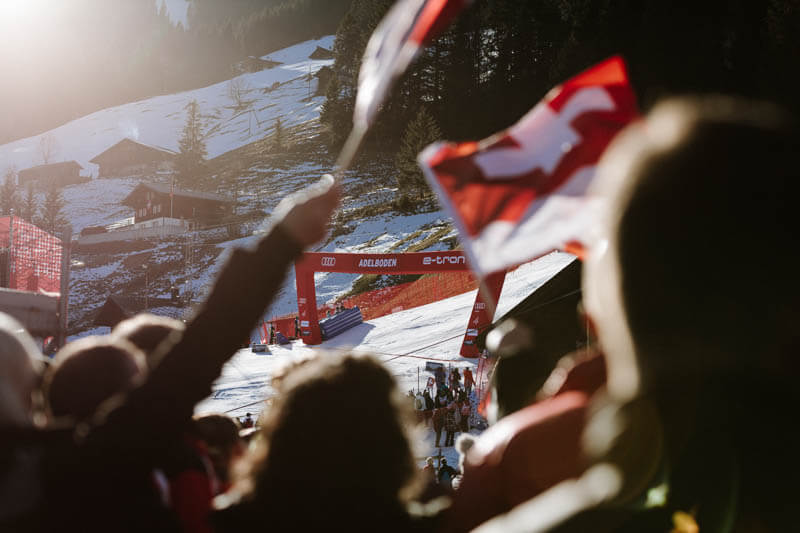
Alpine skiing comprises four core events that sit along a spectrum ranging from very technical (lots & lots of narrow turns) to very fast (flying down the slope with minimal turns). In order from technical to speed, the four events are:
- Slalom
- Giant Slalom
- Super G
- Downhill
For the more technical events of Slalom and Giant Slalom, each race is made up of two runs. In the first run, there are often over 60 racers in a typical world cup race & they are each timed making their way down the slope, ensuring they ski through every pair of gates (if you miss any gates you are immediately disqualified). The fastest 30 skiers from the first run qualify for the second run. The order of the second run starts with the slowest of the 30 and works in reverse order, so the last skier in Run 2 is the fastest skier from Run 1 – ensuring the race is exciting right to the last second. Whichever skier has the combined fastest time from the two runs is the winner!
For the speed events of Super G and Downhill, it is more simple; each skier gets one run down the slope, also having to stay between the gates (which are more spread out than the technical events) and the one with the fastest time wins. While there are often over 60 racers, the strongest competitors are the first to come down & so ‘people’ are usually quite confident to acknowledge the winner after the 30th skier, although technically the race is not complete until every skier is down.
(If you want even more information on the specifications for each event, this article gives a summary and includes the 136 page rule book from the International Ski Federation: Alpine Skiing World Cup Rules: Courses, Gates, Drops (skiproguru.com))
Not all skiers are created equally
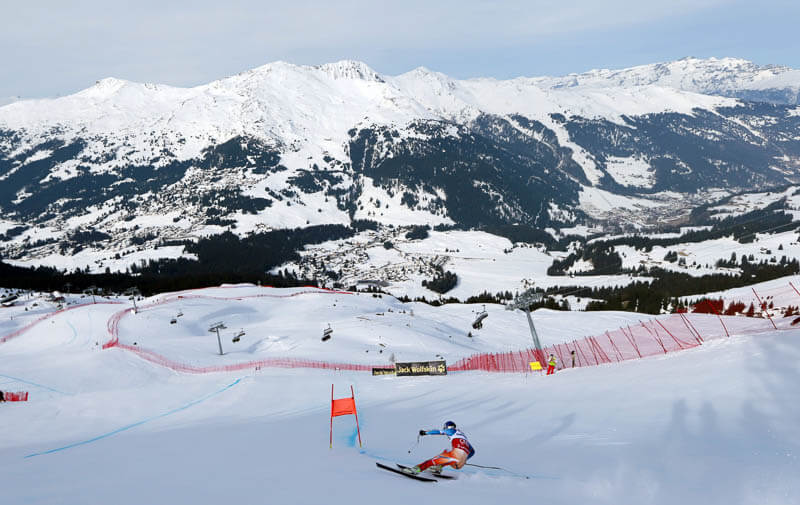
There are very few professional skiers who compete in all four events. Skiers generally have a clear preference for either the technical events or the speed events, competing in the two events from their preferred end of the spectrum, and perhaps even stretching to the next event along the spectrum (ie. technical skiers competing in Super G and speed skiers competing in Giant Slalom).
The top 30 skiers in every World Cup race earn points, ranging from 1 (for 30th place) to 100 (for 1st place). For some skiers it is already a big accomplishment to start earning World Cup points, and for all skiers, it is a great career achievement to reach the podium in any World Cup race.
However, the ultimate prizes are the ‘globes’; these are awarded to the skier with the most points in each of the four events at the end of the season. The ultimate globe goes to the overall winner – this is the skier who picked up the most points in a season across all events.
So who should I be cheering for?
You will not be surprised, given you have probably spotted a mountain or two in Switzerland, that the Swiss are extremely good at alpine skiing. Over the history of the sport they have been incredibly successful, both the men and women, and across all events (perhaps with a slight edge towards the speed events).
We are currently amidst a great era of Swiss alpine skiing; the Swiss team have won the Nations Cup the last two years (awarded to the country with the most overall points), beating their biggest rival, Austria. There are around 10 Swiss competitors in every race, so I will just give you a quick rundown of the ‘stars’ – learn these names and you will already be able to hold your own if you get caught one day with some Swiss people discussing the weekend’s ski races.
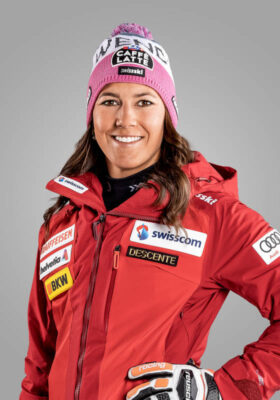
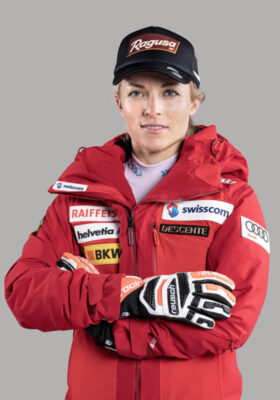
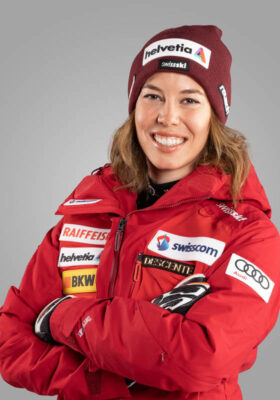
- For the women, the strongest technical skiers are Wendy Holdener and Michele Gisin – both had an unlucky off-season, with broken wrists and glandular fever respectively – but are already looking strong again, and each competing in three events (Slalom, Giant Slalom and Super G). For the speed events, Lara Gut Behrami is the absolute star – with six race victories last season and ranking second in the overall competition. Corinne Suter is also very strong, with an excellent performance at last year’s world championship.
- For the boys, the darling of the team is clearly Marco Odermatt, who also just won the Swiss Sportsman of the Year Award. At only 24 he is an incredibly talented skier, focusing mostly on Giant Slalom and Super G, but also now pushing into Downhill. Just like Lara Gut Behrami, last season he had six race victories and came second in the overall competition. The other star of the team is Beat Feuz, who has been extremely successful in the downhill event, winning the downhill globe the last four years in a row!
Over to you!
If I have enticed you to give the sport a go then check out the SRF TV Program to see when the next races will be shown; there are usually 1-2 races each weekend for the men and the women, generally a mix of technical and speed (ie. the women might have a Slalom weekend the same time the men have a Downhill weekend).
If you want to really feel the excitement and energy of the sport, we are so lucky in Switzerland to have several possibilities to go and watch a World Cup race live! Most seasons there are World Cup races in Adelboden, St Moritz, Wengen, Crans Montana and Lenzerheide.
If you do develop an obsession, let me know, so that we can geek out and engage in some armchair analysis on a Monday morning, Tina Weirather style*.
(Now that you’re an expert you need to know who Tina Weirather is; a successful alpine skier from Lichtenstein, who since her retirement a couple of years ago has become a commentator for the women’s alpine events on SRF).


