It can be easy to assume meal times are similar to the ones at “home”. You don’t hear much about Swiss meal times, the way you do about how late Spain and Italy eat dinner. But whether you’re visiting or moving to Switzerland, you quickly learn that the country has its own mealtime quirks that are good to understand.
Whether you are invited into a Swiss home for a meal, or planning a trip around the Swiss stomach, here is what to expect from z’Morge to z’Nacht. As you would expect, it runs like clockwork.
z’Morge: Swiss Breakfast
The Swiss tend towards an earlier breakfast, especially people working in trades, offices or, of course, on a farm. Older students can also have an early start: my kid has two mornings a week where she needs to be at school for a 7.30am start. So expect bakeries to open from around 6am, cafés a little later, and don’t be surprised if breakfast is over and done with by 9am (except at weekends).
As to what the Swiss eat for breakfast? I wouldn’t say there is a typical thing that every Swiss person eats first thing in the morning. It could be any list of things like bread, cheese or eggs. More on that here.
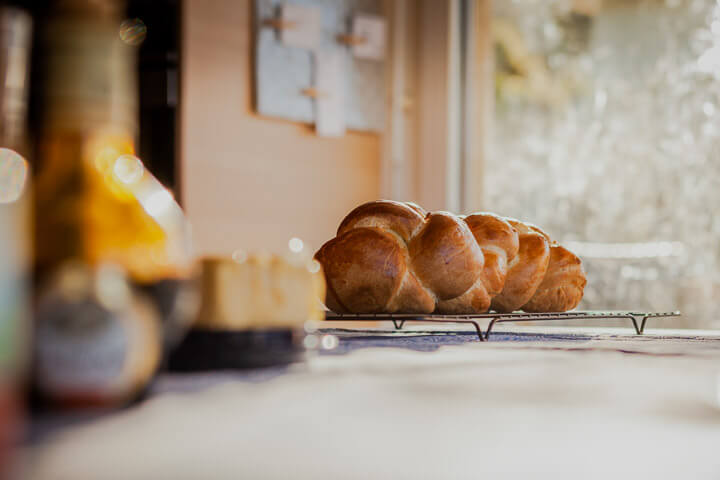
But when you are out and about, the most common breakfast menu found in bakeries and cafes include a piece of bread, a Gipfeli (the Swiss version of a croissant), butter, jam (Konfi), a small juice and a warm drink.
But with café-style breakfasts becoming popular almost everywhere, you will find more modern Swiss cafés serving up eggs, overnight oats, pancakes or even avocado on toast, along with speciality coffees. These are easier to find in cities and tourist destinations than in smaller villages, though.
Some of my personal favourites that I have featured on the Swiss Food Map include SIP in Lucerne and AirTime in Lauterbrunnen.
z’Nüni
The mid-morning break this blog is named after.
z’Nüni means “at nine”, and it is a break observed by many, not just school kids.
Expect to see tradespeople, and even office workers, thanks to those early starts, breaking around 9am for a coffee and a snack.
Z’Nüni can could be a pair of Wienerli (sausages) and bread, or a simple Gipfeli. At school kids bring savoury snacks like crackers, pretzel sticks along with a piece of fruit. Whatever it is, it’s almost always savoury. It is a short break of no more than 30 minutes, and then off they go, back to work until …

z’Mittag
While I might still have many ingrained Australian traits, what has changed is my stomach clock. At Punkt 12, my stomach starts to grumble, and a small sandwich no longer satisfies.
It took me a while to get used to everyone breaking for lunch at 12pm. School kids come home, and workers either head home for lunch or go to a restaurant or café to enjoy a hot lunch. No soggy sandwiches brought from home here, and no one working through lunch.
Local restaurants offer good deals at lunchtime, with many serving a starter and main for just over CHF 20. Look for “tagesmenu” or “mittagsmenu” when out and about. It is one of Switzerland’s best kept secrets when it comes to eating out on cheaper. Lunch is over and done with around 1pm, so don’t expect restaurants to serve a warm lunch after 2pm.
What convinced me to swap to a warm lunch? Having kids in the local school system who have a 1.5-hour break every single lunchtime. Plus realising evening meals are easier if we all eat a warm meal at lunch. For parents who work outside the home, schools offer a (paid) hot lunch programme.
In Zug, where I live, the most popular location for lunch has got to be the Freiruum. It offers a huge range of cuisines, from Japanese to Greek. Of course, not every worker eats a full meal at lunch. Some people grab a salad or sandwich from the bakery, but there is still an ingrained cultural moment to stop work and not eat at your desk.
z’Vieri
z’Vieri is your late afternoon pick-me-up around 4pm (“at four”), the boost to push through until dinner.
This is not just an after-school snack! My mother-in-law, now in her 80s, still ritually stops every day around 4pm for a coffee and a biscuit. A favourite z’Vieri snack is a Weggli (soft bread roll) with a bar of chocolate, especially the Branchli chocolate logs.
Or why not get one of my kids’ favourite snacks, a Schoggibröttli, with chocolate baked right into the bread roll? But seasonal fruit and a packet of Darvida or Blévita crackers are popular too.
z’Nacht – What time do the Swiss Eat dinner?
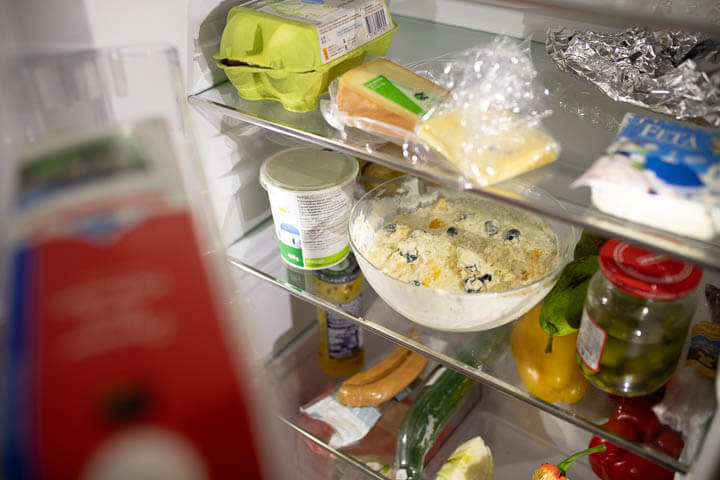
Dinner in Switzerland is traditionally a lighter affair, especially when eaten at home on a normal work day. Called “Café complet” on the German-speaking side, this traditional Swiss dinner consists of bread, butter, cheese and cold cuts like salami and Fleischkäse. Maybe a side salad, or hard-boiled eggs.
Timing depends on which side of the country you are in and your working hours, but generally speaking, expect dinner to start between 6 and 7pm on the German side of the country. The French and Italian sides may start slightly later. When eating out, it is perfectly fine to book a table on the German side for 6 or 6.30pm, with restaurant kitchens closing at 9.30pm at the latest. Eating out in the Italian-speaking region is a little more aligned with Italy, but with so many Swiss-German visitors, early sittings are tolerated.
As with any culture, things are ever changing, and I am sure some people do have a hot meal for dinner. But when I think of my in-laws’ evening meal, it is 99% cold. Maybe a soup. It is always the lighter meal of the day.
And finally, es Bettmümpfeli
Not officially a meal, but a little treat before bed. Think one biscuit. One piece of chocolate. Nothing in excess.
My Bettmümpfeli is often taken from the cookie box in my in-laws’ kitchen, which is filled year-round (but Christmas is when it shines) or from my secret favourite Swiss chocolate stash in my office drawer. Shhh, don’t tell me kids.
Have I got you hungry? If you need some suggestions for great places to eat around Switzerland, purchase my Swiss Food Map.